
A Beginner's Guide to Full-Body Workouts
A beginner full-body workout does not need dozens of exercises or a complicated gym split. A useful starting routine trains the major muscle groups with a small number of manageable movements, gives you time to recover, and becomes gradually more challenging as your ability improves.
Key Points
- A full-body workout trains the major muscle groups within one session.
- Beginners do not need a long list of exercises to build a useful routine.
- For adults, public-health guidance recommends muscle-strengthening activity on at least 2 days each week.
- Bodyweight exercises, resistance bands, free weights and machines can all be used for strength work.
- Start with manageable resistance and controlled technique rather than trying to make every set as hard as possible.
- Consistency and gradual progression matter more than constantly changing the routine.
What Is a Beginner Full-Body Workout?
A beginner full-body workout is a strength session designed to involve the major muscle groups across the body. Instead of having a separate chest day, leg day and back day, you train several areas within the same workout.
For someone learning strength training, that can keep the week straightforward. You can practise a small group of movements repeatedly, leave recovery time between sessions and avoid building your schedule around a complicated training split.
CDC guidance says adult muscle-strengthening activity should involve the legs, hips, back, abdomen, chest, shoulders and arms. It also recognizes weights, resistance bands and bodyweight exercises as ways to perform strength work. [2]
For the broader picture, our guide to weekly exercise recommendations explains how strength and aerobic activity fit together.
Is a Full-Body Workout Good for Beginners?
It can be a practical way to begin because the structure is easy to understand: cover the main areas of the body, recover, then practise those movements again later in the week.
That does not mean a full-body routine is the only valid way to strength train. Split routines can work too. But beginners do not need a complex split simply because experienced gym-goers use one.
Simple full-body approach
- Uses a small group of movements.
- Trains several major muscle groups each session.
- Can fit a two- or three-day schedule.
- Makes repeated practice straightforward.
More complicated split
- Assigns muscles or movements to different days.
- Can require more planning.
- May involve more weekly sessions.
- Is not necessary just to begin.
What Should a Beginner Full-Body Workout Include?
You do not need one perfect exercise list. A more useful approach is to think about broad movement patterns and the muscle groups they train.
1. A knee-dominant lower-body movement
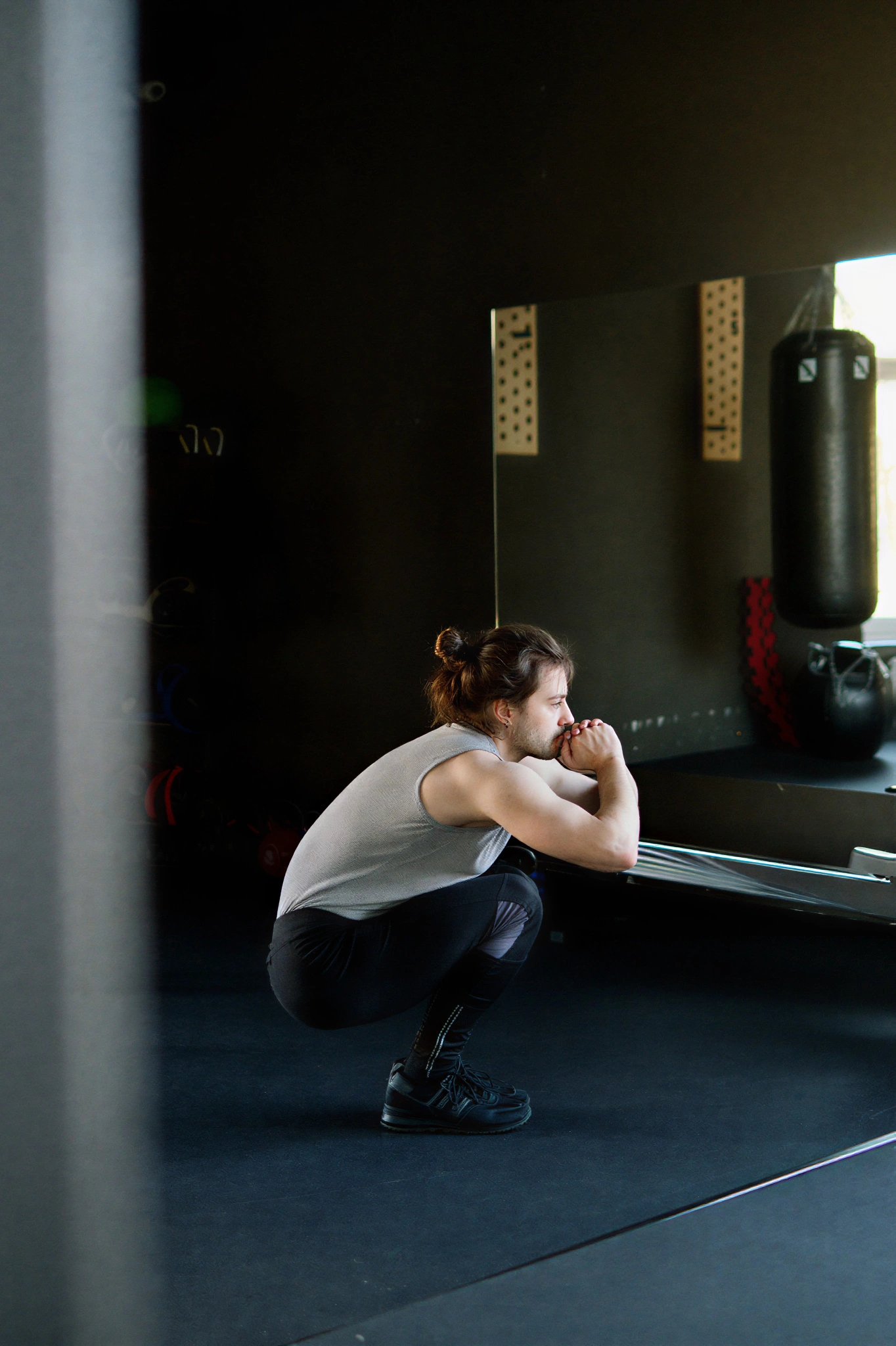
A squat variation is one example. Depending on your ability and equipment, that might be a chair squat, bodyweight squat, goblet squat or an appropriate machine-based alternative.
2. A hip-dominant movement
Hip-hinge patterns and bridges can involve the hips and muscles along the back of the legs. Prioritize comfortable, controlled movement before adding substantial resistance.
3. An upper-body push
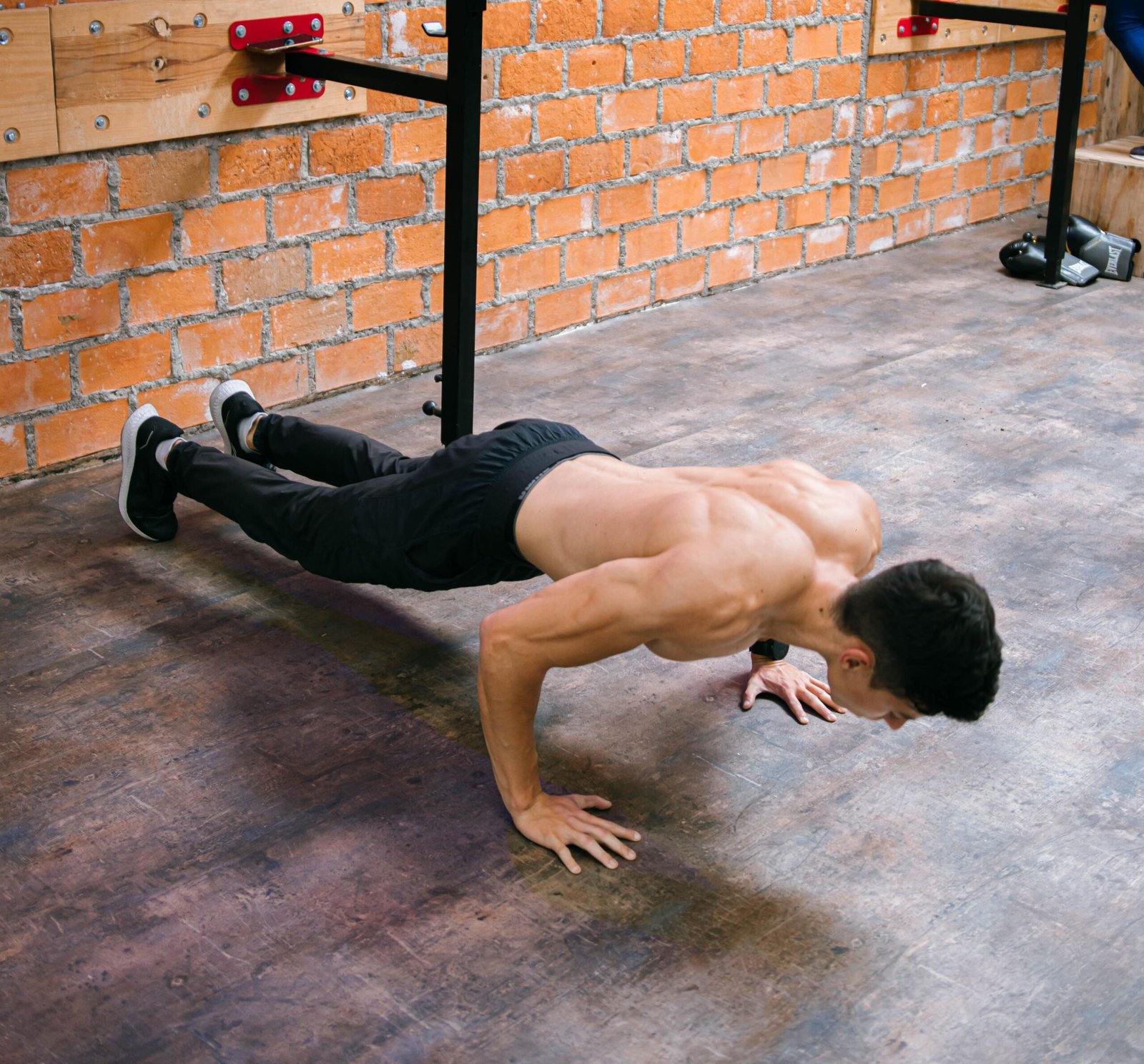
Push-ups, incline push-ups, chest-press machines and dumbbell presses are different ways to train pushing muscles. Choose a version you can perform with control.
4. An upper-body pull
Rows and pulldown variations can train the back and arms. Resistance bands, cable machines or dumbbells can all provide options.
5. Trunk or core work
Core work can include exercises that ask you to control the trunk while the arms or legs move. It does not need to dominate the session.
A Simple Beginner Full-Body Workout Example
This is an example structure for a generally healthy adult beginner, not an individualized prescription. Choose exercise variations and resistance that suit your current ability and equipment.
| Movement | Example | Simple starting structure |
|---|---|---|
| Knee-dominant | Chair squat or bodyweight squat | 1 set of 8–12 controlled repetitions |
| Upper-body push | Incline push-up | 1 set of 8–12 controlled repetitions |
| Upper-body pull | Resistance-band or supported row | 1 set of 8–12 controlled repetitions |
| Hip-dominant | Glute bridge | 1 set of 8–12 controlled repetitions |
| Core | Dead bug or another manageable trunk exercise | 1 controlled set appropriate to the movement |
CDC guidance describes 8–12 repetitions as one set and says adults can start with at least one set; additional sets can provide more benefit. [2] That makes a modest structure a reasonable starting point without assuming a beginner needs high training volume immediately.
How Often Should Beginners Do Full-Body Workouts?
For general adult health, a clear starting point is at least two muscle-strengthening days per week involving all major muscle groups. [1]
That makes two full-body sessions an uncomplicated foundation for many adults beginning strength work. Some people eventually choose three sessions, but an extra day is not automatically better if it makes the routine difficult to recover from or maintain.
For a deeper look at frequency, see how often you should strength train each week.
- Monday: Full-body strength session
- Tuesday: Walking or comfortable activity
- Wednesday: Recovery or light movement
- Thursday: Full-body strength session
- Friday: Walking or comfortable activity
- Weekend: Other activity and recovery according to your routine
How Hard Should a Beginner Full-Body Workout Feel?
A beginner workout does not need to become a test of how exhausted you can make yourself. The early goal is to learn the movements, find suitable variations and establish a routine you can repeat.
CDC guidance says muscle-strengthening effort should reach a point where doing another repetition would be difficult without help. [2] When learning an unfamiliar exercise, however, technique and control come first. You do not need to chase maximum resistance or force repetitions when your form is breaking down.
If you have been inactive for a while, our guide to starting to work out after a break explains how to return gradually.
How Do You Choose the Right Resistance?
Use a level of resistance that lets you perform the exercise with reasonable control. If the movement becomes uncontrolled almost immediately, the resistance or exercise variation may be too difficult for your current starting point.
Resistance does not have to mean a heavy barbell. CDC includes bodyweight exercises, resistance bands and weights among the options that can count as muscle-strengthening activity. [2]
How Should a Beginner Progress a Full-Body Workout?
Progress does not have to mean adding weight every time you exercise. You can first become more consistent, improve control, learn a slightly more challenging variation or gradually add work when the current routine becomes manageable.
- First: learn a manageable version of each movement.
- Then: repeat the routine consistently enough to become familiar with it.
- Next: improve control or complete the planned repetitions more comfortably.
- Later: gradually increase resistance, repetitions, sets or exercise difficulty when appropriate.
Change one thing at a time when possible. A routine is easier to evaluate when you are not simultaneously adding more weight, exercises, sets and training days.
Do You Need a Gym for a Beginner Full-Body Workout?
No. A gym provides useful equipment, but full-body strength work can also use bodyweight exercises and resistance bands. The important question is whether you can train the major muscle groups with appropriate resistance, reasonable technique and a routine you can maintain. [2]
What About Cardio on a Full-Body Workout Plan?
Strength training does not replace aerobic activity. Adult public-health recommendations include both. CDC recommends at least 150 minutes of moderate-intensity aerobic activity per week, or an equivalent amount of vigorous or mixed activity, alongside strength work on at least two days. [1]
Our guide to how much cardio you need each week explains that part of the plan in more detail.
Common Beginner Full-Body Workout Mistakes
Making the first workout too difficult
You do not need to prove your fitness in session one. Manageable exercises give you room to learn and progress.
Adding too many exercises
More movements can make a routine longer without necessarily making it more useful. Cover the important areas first.
Changing the routine constantly
Repeating exercises gives you the chance to learn them. A completely different workout every session makes progress harder to judge.
Ignoring recovery
Training is only one part of a sustainable routine. Your schedule also needs enough recovery to make the next session manageable.
Comparing your starting point with someone else's
Exercise choice, resistance and progression should reflect your current ability and circumstances.
Beginner Full-Body Workout Checklist
- Choose a small number of manageable exercises that collectively train the major muscle groups.
- Learn controlled versions before increasing difficulty.
- Use two strength days per week as a simple public-health baseline for adults.
- Keep early sessions manageable enough that you can return and practise again.
- Progress gradually instead of changing several variables at once.
- Include aerobic activity elsewhere in your overall weekly routine.
- Stop or modify an exercise if it causes pain rather than normal effort.
So, What Should a Beginner Full-Body Workout Look Like?
A useful beginner full-body workout can be surprisingly simple: a few movements that collectively train the major muscle groups, performed with manageable resistance and enough control to learn what you are doing.
You do not need a complicated split, a long exercise list or an exhausting first week. Build the habit first. Once the routine becomes familiar, gradually adjust the exercises, resistance and amount of work to match your developing ability.
The Bottom Line
A beginner full-body workout should make strength training easier to understand, not more complicated. For generally healthy adults, start with a small group of manageable movements that collectively work the major muscle groups, use at least two strength days per week as the general public-health baseline, and increase the challenge gradually as your ability develops.
Sources & Further Reading
- CDC — Adult Activity: An Overview. Adult aerobic and muscle-strengthening recommendations.
- CDC — What Counts as Physical Activity for Adults. Muscle-strengthening examples and guidance on repetitions, sets and major muscle groups.
- CDC — Chronic Conditions & Disabilities Activity. Activity guidance for adults with chronic conditions or disabilities.